
 es
es
Protección de la información que acompaña cada paso de la vida
Siga a OHMIEX Intelligence para obtener información más valiosa que debe conocer de manera anticipada.


Siga a OHMIEX Intelligence para obtener información más valiosa que debe conocer de manera anticipada.
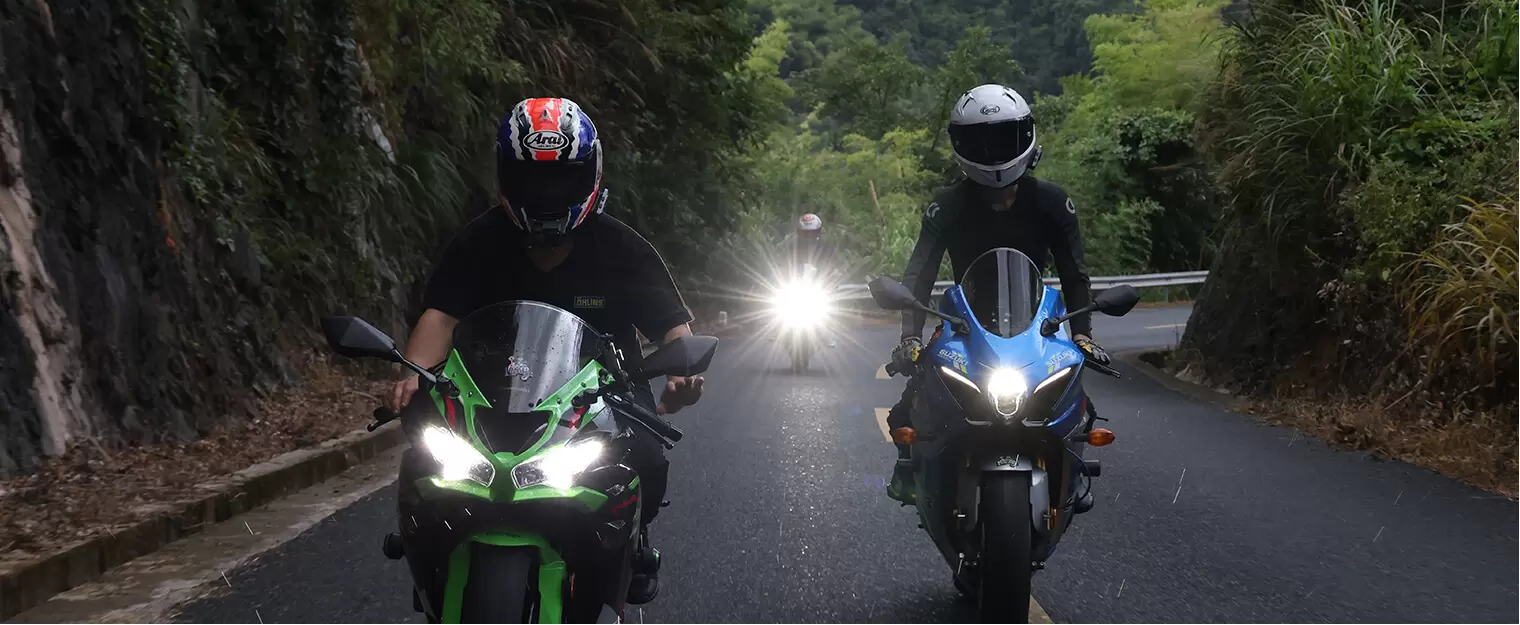
In professional motorsports such as MotoGP, communication is treated as a mission-critical system. Instructions from race engineers reach riders with precision, clarity, and near-zero latency. Every message is intentional, filtered, and optimized for a high-noise, high-speed environment. There is no room for ambiguity, dropouts, or guesswork.
Yet when we step away from the paddock and onto public roads—weekend rides through mountain passes, long-distance touring with friends, or daily group commutes—the experience is strikingly different. Helmet intercoms that promise clarity often deliver wind roar. Conversations are interrupted by disconnections. Critical navigation prompts arrive late or not at all. Riders are left repeating themselves, raising their voices, or simply giving up on communication altogether.
This contrast exposes a reality that many riders intuitively feel but rarely articulate: despite years of product iterations, the core dilemma of helmet communication has not truly been solved.
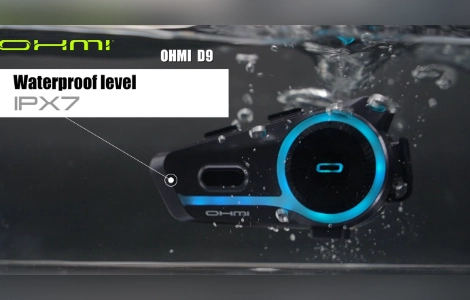
Discussions with race technicians, product engineers, and seasoned touring riders point to a shared conclusion. The issue is not a lack of features. Modern helmet communication systems are packed with specifications—Bluetooth versions, mesh networking, voice assistants, app-based controls. The problem lies in execution under real riding conditions.
On the track, communication systems are designed around a single objective: deliver clear, reliable information at speed. On public roads, however, communication devices are expected to do everything at once—intercom, music streaming, navigation, phone calls—often with hardware and software compromises that undermine the fundamentals.
Riders quickly recognize the trade-offs:
Excellent audio quality in controlled conditions, but unstable connections once the group spreads out.
Advanced feature sets paired with battery life that cannot support a full day’s ride.
Aggressive noise reduction that removes wind noise, but also suppresses a rider’s voice or a teammate’s warning.
These shortcomings are not minor inconveniences. They affect safety, confidence, and the overall riding experience.
On mountain roads, communication serves a very different but equally critical role as it does on the racetrack. Riders rely on intercoms to warn of gravel in corners, sudden braking, route changes, or mechanical issues. Clear communication reduces reaction time and cognitive load, allowing riders to focus on the road rather than troubleshooting their equipment.
When communication fails, riders compensate in risky ways: hand signals at speed, sudden lane changes, or delayed responses to hazards. In long-distance touring, fatigue amplifies these risks. A dead battery or unstable connection late in the day does more than break the conversation—it removes a layer of situational awareness.
This is why helmet communication should be evaluated less as a consumer gadget and more as a riding system with safety implications.
Across use cases—from racing environments to open-road touring—three technical pillars consistently determine whether a communication system succeeds or fails.
Noise cancellation is often marketed aggressively, but effective noise management is more nuanced than simply removing wind sound. At highway speeds, wind noise overlaps with human speech frequencies. Poorly tuned algorithms can overcorrect, filtering out not just noise but also critical voice information.
A robust system must distinguish between constant environmental noise and dynamic human speech in real time. This requires both capable hardware and well-trained algorithms. In group riding scenarios, clarity matters more than studio-quality sound. A slightly compressed voice that is always intelligible is far superior to high-fidelity audio that disappears when conditions change.
Battery capacity alone does not guarantee endurance. Real-world usage involves intercom channels opening and closing, music streaming, navigation prompts, and constant wireless communication. Inefficient power management can drain even large batteries quickly.
For riders, battery anxiety is not abstract. A communication system that fails mid-ride removes a key layer of coordination and reassurance. On multi-day tours or remote routes, this can escalate from inconvenience to genuine concern.
A reliable system must be designed around realistic riding durations, not laboratory benchmarks. Fast charging helps, but consistency over long sessions is the true measure of performance.
Group rides are dynamic. Distances between riders change. Terrain interferes with signals. Riders join or leave the group. Communication systems that require constant manual re-pairing or complex group management introduce distraction at precisely the wrong moments.
La estabilidad no significa mantener una conexión perfecta a toda costa; significa comportamiento predecible. Los pasajeros deben comprender cómo reacciona el sistema cuando alguien se sale del alcance y qué tan rápido se recupera. La reconexión perfecta es mucho más valiosa que el alcance máximo teórico que sólo funciona en condiciones ideales.
Muchos productos intentan diferenciarse mediante la ampliación de funciones en lugar del refinamiento fundamental. Los asistentes de voz, los ecosistemas de aplicaciones y los perfiles de sonido personalizables son atractivos en las hojas de especificaciones, pero a menudo aumentan la complejidad del sistema sin abordar el escenario central de conducción.
Cada característica adicional compite por la potencia de procesamiento, la capacidad de la batería y la atención del usuario. Cuando los conceptos básicos no son sólidos, estos extras pueden degradar la experiencia general. Los usuarios acaban gestionando el dispositivo en lugar de beneficiarse de él.
Las soluciones más exitosas en los deportes de motor siguen una filosofía diferente: la tecnología debería desaparecer del flujo de trabajo. Cuando la comunicación funciona de forma intuitiva, los pasajeros dejan de pensar en ello por completo.
Los equipos de MotoGP invierten mucho en la confiabilidad de las comunicaciones porque el costo de una falla es inmediato y mensurable. En la vía pública, las consecuencias son menos dramáticas pero no menos reales. Se aplican los mismos principios:
Priorice la claridad sobre la novedad.
Diseñe para las peores condiciones, no para demostraciones de marketing.
Reducir la carga cognitiva del usuario.
Cuando estos principios guían el desarrollo, la tecnología se convierte en un facilitador en lugar de una distracción.
Las conversaciones con entusiastas del turismo y ciclistas cotidianos revelan un patrón constante. Cuando se ven obligados a priorizar, la mayoría de los usuarios están dispuestos a aceptar menos funciones si el sistema ofrece:
Comunicación de voz clara y rápida.
Una batería que dura todo el viaje sin ansiedad.
Una conexión que se mantiene estable sin intervención constante.
Estas no son expectativas premium; son requisitos básicos. Un producto que los ejecuta de manera consistente es mucho más valioso que uno que sobresale en un área y falla en otra.
La próxima generación de sistemas de comunicación con cascos no ganará por ser más ruidosa, llamativa o compleja. La adopción en el mercado favorecerá soluciones que traten la comunicación como una función integrada de la conducción, una que se adapta al contexto, gestiona los recursos de forma inteligente y respeta la atención del ciclista.
Desde los circuitos hasta las carreteras de montaña, el problema ha sido claramente identificado. La oportunidad ahora reside en la ingeniería disciplinada y el diseño centrado en escenarios. Cuando los fundamentos finalmente se ejecuten sin concesiones, la comunicación con el casco dejará de ser un tema de conversación y comenzará a ser algo en lo que los ciclistas simplemente confíen.
Y quizás ese sea el verdadero punto de referencia del éxito: cuando el silencio ya no se rompa con un “¿Puedes oírme ahora?” sino con palabras seguras y oportunas que lleguen exactamente cuando se necesitan.
¿Listo para viajar sin conjeturas?
Stop adapting your riding style to unreliable communication. Whether you are carving mountain roads with friends or logging serious miles on long-distance tours, clear and dependable helmet communication should be a given—not a compromise.
Choose a solution built around the fundamentals that matter most: consistent clarity at speed, all-day battery confidence, and stable connections that work without constant adjustment. When communication fades into the background, your focus stays where it belongs—on the road ahead.
Re-evaluate what you expect from your riding gear. Invest in communication that works as hard as you do, from the first mile to the last.

 Email
Email WhatsApp